Hair thinning can feel like it is happening fast, but the path to regaining fullness may be simpler than you think. Platelet-rich plasma therapy uses your body’s own natural healing cells to support healthier, thicker hair without surgery or harsh medications. In this guide, we will explain PRP hair restoration how it works step by step, helping you understand what to expect from this non-invasive treatment. Whether you are just starting to notice thinning or you have been searching for a natural solution, PRP offers a science-backed path to renewed confidence.
Schedule your PRP hair restoration consultation in Richmond, TX today. Book Your Appointment
PRP Hair Restoration How It Works: What Is PRP Hair Restoration?
PRP hair restoration is a non-surgical treatment that uses your body’s own platelets to naturally support hair growth. The process, as described by the National Institutes of Health, involves isolating platelets from your blood and concentrating their growth factors to stimulate activity in your hair follicles. These growth factors help extend the growth phase of your hair cycle, encouraging thicker and fuller hair over time.
What makes PRP different from other hair loss treatments is that it uses nothing artificial. There are no chemicals, no synthetic hormones, and no foreign substances being introduced to your body. Your own blood is drawn, processed, and then reinjected into your scalp in areas where hair is thinning. This natural approach appeals to many people in Richmond, Katy, and Sugar Land who want a gentler alternative to surgical hair restoration or daily medications.
At Wilmarwell, we offer medical-grade PRP treatments as part of our comprehensive aesthetic services. Our registered nurse-supervised team provides a premium spa experience in a comfortable, elegant setting. The goal is not just to treat thinning but to help your hair reclaim its natural vitality and thickness, enhancing your overall appearance and confidence.
How PRP Hair Restoration Works: A Step-by-Step Guide
To understand PRP hair restoration how it works, it helps to walk through the process one step at a time. The entire procedure is surprisingly straightforward and takes less than an hour in our Richmond med spa.
Step 1: Blood Draw
The process begins with a simple blood draw from your arm, typically between 10 and 60 milliliters, as noted by Healthline. This is the same type of blood draw you would experience during a routine lab test. The amount collected depends on the number of areas being treated and the PRP preparation system being used.
Step 2: Centrifugation
Your blood is placed into a centrifuge, a machine that spins at high speed to separate the blood into three distinct layers. After about 10 minutes in the centrifuge, according to Healthline, your blood separates into red blood cells at the bottom, platelet-rich plasma in the middle, and platelet-poor plasma at the top. The middle layer, rich in healing growth factors, is what we carefully extract for your treatment.
One important factor to understand is that platelet levels vary naturally from person to person. The International Society of Hair Restoration Surgery notes that normal platelet levels range from 150,000 to 450,000 per microliter, which means some PRP samples will naturally contain more growth factors than others. This is one reason why PRP results can vary between individuals.
Step 3: Scalp Microinjections
The concentrated platelet-rich plasma is then injected very superficially into the skin of your scalp in the areas of thinning. A topical numbing agent is applied beforehand to keep you comfortable throughout the process. The injections are precise and targeted to ensure the growth factors reach the hair follicles that need them most. The entire injection portion takes about 20 to 30 minutes.
PRF vs. PRP: What’s the Difference for Hair Restoration?
You may have heard both PRP and PRF mentioned as hair restoration options. While they share the same core idea of using your blood’s natural healing properties, there are important differences between them.
| Feature | PRP (Platelet-Rich Plasma) | PRF (Platelet-Rich Fibrin) |
|---|---|---|
| Preparation method | Blood is spun at high speed with anticoagulants to separate plasma quickly | Blood is spun at a slower speed without anticoagulants, preserving more natural components |
| Growth factor concentration | Moderate concentration of platelets and growth factors | Higher concentration of platelets, white blood cells, and natural fibrin |
| Release duration | Growth factors release quickly over a few days | Growth factors release slowly over 1 to 2 weeks for sustained support |
| Number of sessions typically needed | 3 to 4 initial sessions spaced one month apart | Often 2 to 3 sessions due to the more concentrated and longer-lasting formula |
| Treatment time | About 45 to 60 minutes per session | About 60 to 75 minutes per session due to longer centrifuge time |
PRF is considered the more advanced generation of this therapy. Because PRF does not use anticoagulants, it retains more of the natural fibrin matrix that your body uses to support wound healing. This fibrin matrix acts as a scaffold that slowly releases growth factors over time, potentially providing longer-lasting stimulation to your hair follicles.
However, PRP remains the more widely available and well-studied option. Most research on platelet therapy for hair restoration has been conducted using PRP, so there is more published data supporting its effectiveness. The choice between PRP and PRF depends on your specific needs, your hair loss pattern, and what your provider recommends based on your individual case.
Who Is a Good Candidate for PRP Hair Restoration?
PRP hair restoration is not for everyone, but many people experiencing early-to-moderate thinning may benefit from this natural, non-surgical approach.
Ideal Candidates
PRP tends to work best for individuals who still have active hair follicles but are noticing gradual thinning. According to published research, PRP is commonly used to help manage androgenetic alopecia, the most common form of hair loss characterized by progressive follicle miniaturization. In practical terms, this means people in the early to middle stages of male or female pattern hair loss often see the most noticeable improvement.
Good candidates typically have:
- Active, visible hair follicles even if the hair is thinning
- Early-to-moderate hair loss that has not progressed to complete baldness
- Realistic expectations about what PRP can achieve
- Good overall health without blood disorders
Who May Not Be a Candidate
PRP may not be recommended for individuals with certain blood disorders, active infections on the scalp, some autoimmune conditions, or those taking specific medications that affect blood clotting.
It is also important to understand that PRP is not a solution for completely bald areas where follicles have already shut down. PRP works by supporting existing follicles, not by creating new ones. This is why early intervention tends to produce the most satisfying results.
At Wilmarwell, we take a holistic approach to wellness. For those exploring cellular wellness therapies alongside their hair restoration journey, our team can help you build a comprehensive wellness plan that supports both internal vitality and external results. Many of our Houston-area clients also complement their hair restoration with wellness coaching to optimize their lifestyle habits and holistic fitness guidance for overall vitality.
What to Expect During a PRP Hair Restoration Session
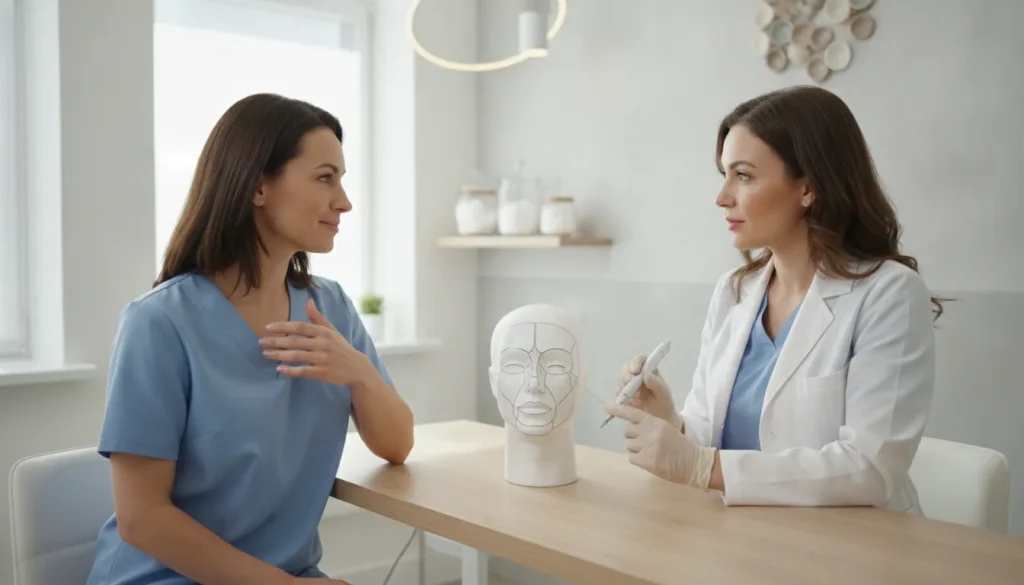
Knowing what happens during a PRP hair restoration session can ease any concerns and help you feel prepared for your visit. The experience is designed to be comfortable, professional, and remarkably low-downtime.
Before Your Session
Your provider will ask you to avoid blood-thinning medications and supplements such as ibuprofen, aspirin, and fish oil for a few days before your appointment. Staying well-hydrated on the day of your session helps make the blood draw smoother. Most patients find it helpful to arrive with a clean, product-free scalp.
During the Procedure
Your session begins with a topical numbing cream applied to your scalp. This ensures that the injection process is as comfortable as possible. Once you are numbed, your provider draws your blood, typically 10 to 60 milliliters from your arm, based on Healthline. The blood is then processed in a centrifuge for about 10 minutes.
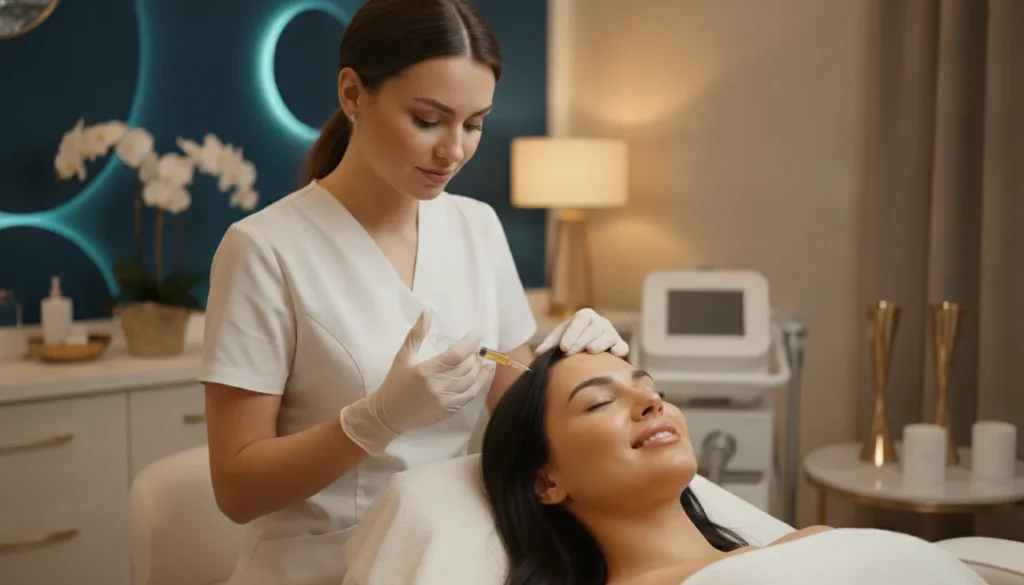
After the centrifuge separates the platelet-rich plasma, your provider uses a fine needle to inject the PRP into your scalp in the areas of thinning. The injections target the superficial layers of the skin around each hair follicle. The entire procedure from start to finish takes about 45 to 60 minutes. Most patients at our Richmond med spa describe the sensation as mild pressure rather than sharp pain.
After Your Session
One of the greatest advantages of PRP is that there is no downtime. You can drive yourself home and return to your normal routine immediately after the session. Some mild tenderness, redness, or slight swelling at the injection sites is normal and typically resolves within 24 to 48 hours.
Your provider will advise you to avoid washing your hair for 24 hours and to skip strenuous exercise for the rest of the day. Over the next few weeks, you simply return to your normal routine while your body’s natural growth factors get to work supporting your hair follicles from within.
How Soon Will You See Results from PRP Hair Restoration?
When you start a new hair care plan, you want to know when your hair will look full again. Hair growth takes time. Your hair follicles need to receive the right signals to restart their natural growth cycle. To understand PRP hair restoration how it works on your scalp, you should look at how these cells react to natural growth factors over several months.
Your First Few Sessions
A single visit is not enough to change your hair pattern. A standard plan involves three to four sessions spaced about a month apart. For residents in Richmond, TX, booking these sessions at a local spa makes it easy to stay on track. This initial series helps build up the growth factors in your scalp. Most patients see real growth within three to six months after starting their PRP therapy. The best results usually appear after this first series is complete.
These injections work at a cell level to release growth factors that support hair growth. Research from the National Institutes of Health shows that these proteins help stimulate new growth. This process gives your hair follicles the support they need to stay active.
Signs of New Hair Growth
How do you know the process is working? The first sign most people notice is less hair shedding. You may see fewer hairs in your shower drain or on your brush. Over the next few weeks, you will start to see thicker, fuller hair along your part and near your hairline. The new hair strands often feel stronger and look more healthy than before.
While PRP is widely known for facial care through PRP-based aesthetic treatments, its use on the scalp targets hair follicles directly to help them thrive. Our team can also discuss medical weight loss options if overall wellness is part of your broader health goals.
Long-Term Maintenance Plans
It is important to know what to expect before you start. PRP is not a permanent solution for hair thinning. Instead, it works best as a form of ongoing care. Your hair follicles can react differently based on your health and lifestyle. This is why a custom plan is so helpful. Spacing your touch-up visits based on your unique growth pattern ensures that your hair remains thick and healthy.
Once you achieve your best growth, you will need maintenance sessions every six to twelve months. These follow-up visits help sustain your results, as recommended by Texas Dermatology. These regular touch-ups keep the follicles nourished so that your new hair does not begin to shed again.
Frequently Asked Questions
Does PRP actually regrow hair?
PRP hair restoration works by using your own blood cells to support hair growth. The platelets in your blood contain natural growth factors that help wake up weak hair follicles. According to a study on PubMed Central, these proteins can prompt active follicles to grow thicker hair. This care does not create new hair on bald spots, but it can help thin hair look much fuller.
How much does PRP hair restoration cost?
The cost of PRP hair restoration depends on how many sessions you need. In most cases, a single session can cost four hundred to eight hundred dollars. Since most people need three or four visits at first, the total cost usually lands between twelve hundred and three thousand dollars. You can get an exact price and a custom plan by booking a talk with a local spa.
How long do PRP hair restoration results last?
PRP hair restoration results can last for a long time, but they do not last for good. Without any care, most people see their results start to fade after about twelve months. According to Texas Dermatology, you will need touch-up visits every six to twelve months to keep your hair looking thick. These regular visits make sure your hair follicles stay active and healthy.
Are there any side effects from PRP hair treatment?
PRP hair treatments are very safe because they use your own blood cells. This means you do not have to worry about a bad response to the fluid. You may feel some mild pain, redness, or swelling on your scalp right after your session. These minor side effects are very common and often go away in a few days. You will not need any downtime, so you can go back to your normal day right after the visit.
Ready to Schedule Your PRP Hair Restoration Consultation?
If you wait too long to address hair thinning, your delicate hair follicles can slowly shrink and completely lose their ability to grow new hair. By starting your personalized hair restoration sessions today, you can protect your remaining follicles and support natural hair growth while they are still fully active. Our skilled team in Richmond is always ready to guide you toward customized premium skincare services that keep your natural hair looking healthy, thick, and vibrant.
Are you ready to take active steps? If you want to revitalize your thinning hair, our skilled professionals are here to help you. Call +18324957404 today to schedule your PRP hair restoration consultation with our expert med spa team here in Richmond and start your journey.