
.
Enlarged pores can become more noticeable when oil production, sun exposure, or reduced skin elasticity changes the way light reflects across the face. That does not mean the pores are permanently fixed at one size. But it does mean a realistic plan should focus on improving the surrounding skin texture rather than promising to erase them.
So, does microneedling work for enlarged pores? It may help some people by creating controlled micro-injuries that support collagen and elastin remodeling, which can make uneven texture and pore appearance look smoother over time. It cannot permanently close pores, and results vary with skin type, pore-related factors, treatment planning, and aftercare.
For Richmond, TX readers, the useful question is not simply whether microneedling works, but how a qualified provider would assess the concern and set expectations. Understanding the treatment’s mechanism, likely series, and practical limits is the best place to begin.
Call Wilmarwell at (832) 495-7404 to discuss your skin goals.
Does Microneedling Work for Enlarged Pores?
Microneedling may make enlarged pores look less noticeable for some people, particularly when uneven texture or reduced skin firmness contributes to their appearance. It does not permanently close pores or remove them. Pore visibility is affected by factors such as genetics, oil production, elasticity, and the structure of each follicle. So the goal is a smoother, more even-looking surface rather than a permanent change in pore anatomy.
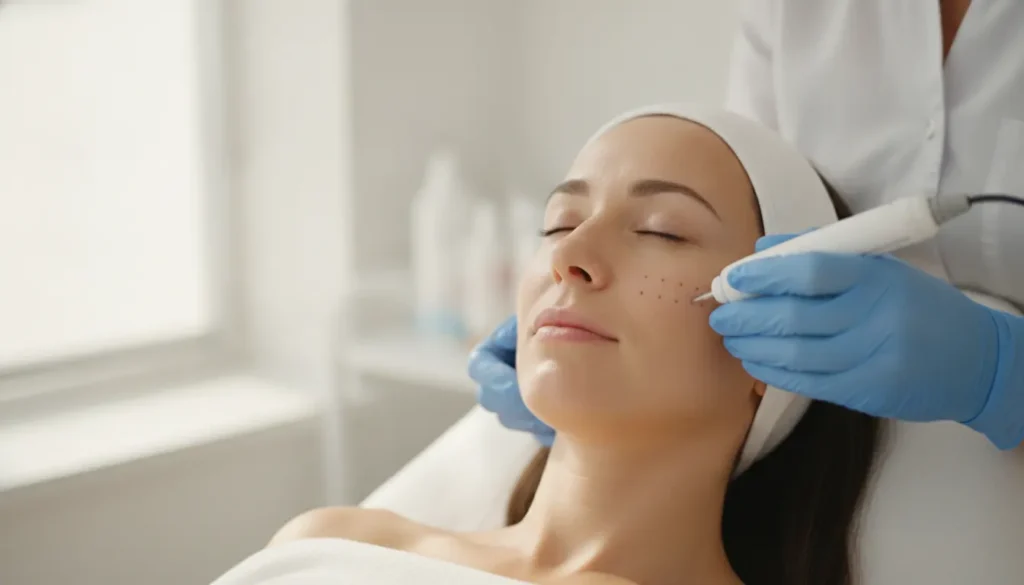
A professional treatment uses very fine needles to create tiny, controlled openings in the skin. These micro-injuries activate the skin’s natural healing response. As the skin repairs itself, it can stimulate collagen and elastin production. Those proteins help support firmer, smoother skin, which may soften the contrast around pores and improve the way texture looks in certain lighting.
The response is gradual. Microneedling is not a pore-erasing treatment, and results can vary with skin type, current skin condition, collagen response, active acne, scarring, and aftercare. A provider also needs to consider whether the concern is mainly oil-related, texture-related, or connected to another skin issue. That evaluation helps determine whether microneedling is an appropriate option and how conservative treatment should be.
What does the research show?
A 2025 case series offers a useful but limited example. Researchers evaluated microneedling combined with topical poly-D,L-lactic acid, or PDLLA, for facial pores and skin texture in 15 patients. Participants received three sessions spaced three weeks apart. The researchers assessed pore size with a standardized visual grading scale and reviewed clinical photographs for texture changes.
The report described noticeable texture enhancement, and 80% of participants reported high satisfaction. Mild redness and swelling occurred in some patients and resolved within 48 hours. The reported findings were maintained through 22 weeks.
However, this was a small case series involving a combination approach. It was not a large randomized trial of every microneedling device or protocol. The authors specifically noted that larger randomized studies are needed to validate the findings. You can review the published pore and texture case series for its methods and limitations.
In practical terms. The evidence supports a measured answer: microneedling can be a reasonable tool to discuss when enlarged pores are part of a broader texture or firmness concern. But it cannot guarantee a particular degree of improvement. A qualified provider can help separate realistic texture goals from changes that require a different treatment or ongoing skin-care strategy.
Why Pores Look Larger Than You Expect
Pore appearance is shaped by more than the condition of the skin’s surface. Genetics can influence pore size and the amount of oil produced by the sebaceous glands. When sebum, or natural skin oil, collects around a follicle, the opening may appear more noticeable, especially in areas such as the nose, cheeks, and forehead.
Age can also change the way pores look. As skin gradually loses some elasticity and structural support, the openings may seem less refined. Sun exposure can add to this effect by contributing to changes in skin texture and elasticity over time. A review of factors associated with enlarged pores also identifies hair-follicle volume and cosmetic use as contributors to how visible pores appear. You can read the research review on facial pores and skin texture for more detail.
Why oil and visual contrast matter
Oiliness can create visual contrast around each pore. A thin layer of sebum may reflect light unevenly, while buildup or makeup settling into an opening can make it stand out in photographs or bright overhead lighting. This does not necessarily mean the pore has permanently changed. Hydration, cleansing habits, product texture, and the way light falls across the skin can all affect what you notice from day to day.
Texture concerns can overlap with active acne, acne scarring, pigmentation, or uneven elasticity. Those concerns may need to be considered separately rather than treated as one problem. A qualified provider can assess the skin in person and discuss whether a texture-focused approach is appropriate for your goals.
What treatment can realistically change
Microneedling may help improve the appearance of uneven texture by creating controlled micro-injuries that encourage a wound-healing response and collagen remodeling. As the skin remodels, some people may see pores look less prominent because the surrounding texture appears smoother. The goal is an appearance improvement, not a permanent change to pore biology.
No treatment can promise to erase pores or make every pore invisible. Genetics, oil production, age-related elasticity changes, sun exposure, and aftercare continue to influence how skin looks. If you are considering treatment in Richmond, Texas, realistic expectations and an individualized assessment are more useful than before-and-after comparisons that imply identical results for everyone.
What a Richmond, TX Microneedling Plan May Include
A thoughtful plan starts with your skin, goals, and medical context rather than a preset protocol. For someone exploring whether microneedling may improve the appearance of enlarged pores, the process may include these steps:
- Evaluate your goals and history. During the initial visit, the provider can discuss what you want to change. Examine pore appearance and overall skin texture, and review your medical history, medications, relevant contraindications, and expectations. This conversation also supports informed consent. Active acne, scarring, skin sensitivity, or other factors may affect whether treatment is appropriate and how it should be approached.
- Choose an individualized treatment approach. Microneedling depth is not one-size-fits-all. A clinical provider may adjust the depth for the treatment area, skin characteristics, and goals. The purpose is controlled, deliberate treatment, not simply using the deepest available setting. Your plan may also account for how your skin responds after the first session and whether adjustments are appropriate for later visits.
- Complete the in-office treatment. Wilmarwell offers MDPEN Ultra microneedling as a listed 60-minute service. The medical-grade device uses adjustable depth settings, and the treatment setup includes sterile, single-use needle cartridges. Wilmarwell describes microneedling within an RN-supervised clinical model supported by written protocols, patient education, and safety procedures.
- Discuss whether an enhancement fits your goals. Depending on the assessment, a plan may include a targeted serum or gel. PRP, or platelet-rich plasma, and PRF, or platelet-rich fibrin, may also be considered as optional enhancements. These are not automatic requirements, and an add-on should be selected for an individualized reason rather than treated as a guarantee of better pore results.
- Plan the series and reassessment. Some people may need multiple treatments, while the number and spacing should be individualized. A provider can reassess skin response, pore appearance, recovery, and aftercare before recommending another session. A study of a different microneedling combination used three sessions, but that schedule should not be treated as a prediction for MDPEN patients. You can review practical local questions in this guide to microneedling in Richmond, TX.
The aim is to make pores look less noticeable through changes in texture and skin quality, not to permanently close or erase them. A consultation is the appropriate place to determine whether this approach fits your skin and expectations.
How Long Do Pore Improvements Take to Show?
Pore-related changes are usually gradual because microneedling relies on the skin’s healing and collagen-remodeling process. The treatment creates controlled micro-injuries, and the resulting changes in texture develop as the skin repairs itself. That means early skin changes should not be treated as the final result, and pores will not be permanently closed or erased.
Some people may notice a smoother look as the initial irritation settles, while more meaningful texture changes can take longer to develop. Cleveland Clinic notes that multiple microneedling treatments may be needed to achieve desired results. The number and spacing of treatments should be based on your skin, pore appearance, treatment depth, and response rather than a fixed promise.
What the pore research actually measured
A 2025 case series offers useful context, but it does not predict the outcome of every patient or directly establish results for every microneedling device. The study involved 15 patients who received three microneedling sessions with topical PDLLA, spaced three weeks apart. Researchers evaluated pore size with a standardized visual grading scale and assessed texture through clinical photography.
The report described noticeable texture enhancement, and 80% of participants reported high satisfaction. The findings were maintained through 22 weeks in that study. However, the treatment included PDLLA, the sample was small, and the authors said larger randomized trials are needed. It is more accurate to view the study as limited supporting evidence than as a guaranteed schedule or result.
Why recovery and results vary
Mild redness or swelling can occur after treatment. In the case series, those effects resolved within 48 hours, but individual recovery may differ. Skin type, active acne or scarring, collagen response, treatment depth, and aftercare can all affect how the skin looks and how quickly it settles. Following your provider’s instructions and avoiding unnecessary irritation can help protect the healing skin.
A consultation can clarify whether gradual texture remodeling fits your goals and whether another concern should be addressed first. A qualified provider can also discuss what improvement may realistically look like for your skin.
What Aftercare Helps Protect Skin Texture?
Aftercare is part of the treatment plan, not an afterthought. Microneedling creates controlled micro-injuries, so the treated skin may be more sensitive while it settles. Your provider should give you instructions based on the treatment depth, your skin, and any products or enhancements used. Follow those instructions instead of copying a routine from social media or changing products without approval.
In general, keep post-treatment care gentle. Cleanse as directed with a mild product, use only the moisturizer or other barrier-supportive products your provider approves, and avoid rubbing or scrubbing the area. Do not pick at flaking skin or touch the treated area unnecessarily. Picking can irritate the skin and may interfere with an even-looking recovery.
Protect the skin while it is more reactive
Sun protection matters because recently treated skin can be especially vulnerable to irritation and unwanted color changes. Ask your provider when and how to resume sunscreen, and follow the specific product guidance you receive. Until you are cleared, avoid prolonged direct sun and use practical protection such as shade and a hat when appropriate.
It is also important to pause products or activities your provider has not approved. That may include strong exfoliating acids, retinoids, abrasive scrubs, fragranced products, friction from vigorous facial treatments, or heat exposure. Do not assume that a product is safe simply because you used it before treatment. The appropriate restart point depends on your skin response and the plan created for you.
Wilmarwell’s guidance emphasizes that visible improvement can depend partly on aftercare, along with skin type, pore appearance, collagen response, active acne, and scarring. If you have easily irritated skin, review the candidacy and preparation considerations in this guide to microneedling for sensitive skin before scheduling.
Contact your provider if your response concerns you, worsens, or does not seem to match the instructions you were given. They can determine whether you need an adjustment or an in-person assessment. Avoid self-diagnosing or adding products to correct a reaction, since that can make the situation harder to evaluate.
When Microneedling May Not Be the Best First Step
Microneedling can be useful for improving the appearance of uneven texture and enlarged pores, but timing matters. A qualified provider should first consider whether the skin is calm enough for a controlled treatment and whether another concern is driving the pore appearance. Active acne, irritation, infection, or a relevant medical history may make evaluation and preparation more appropriate than starting immediately.
This is not a reason to assume microneedling is unsafe for you. It is a reason to avoid treating a changing skin problem without an individualized review. Wilmarwell’s first-treatment evaluation is designed to discuss medical history, medications, contraindications, goals, expectations, and informed consent. That conversation can help determine whether MDPEN Ultra microneedling fits your situation or whether a different first step makes more sense.
| Situation | Possible next step |
|---|---|
| Calm skin with texture or pore concerns | Discuss whether a customized microneedling plan could support gradual texture remodeling. |
| Active acne, significant inflammation, infection, or open irritation | Pause treatment and seek an evaluation before adding controlled micro-injuries to the skin. |
| Complex medical history or medications that may affect healing | Review the relevant history with a qualified provider and clarify candidacy first. |
| Surface buildup or a concern better suited to a gentler approach | Ask whether skincare, sun protection, acne control, chemical exfoliation, or microdermabrasion is more suitable. |
Why active acne or irritation deserves a pause
Microneedling intentionally creates tiny openings in the skin. If acne or inflammation is active, or if the skin is already irritated. Adding another stimulus may not address the underlying issue and may make the treatment plan less predictable. A provider may recommend focusing first on acne control, barrier-supportive skincare, or another appropriate evaluation. Do not use a pore concern as a reason to self-treat a rash, infection, or persistent breakout.
Alternatives can still support the same goal
Not every visible pore concern requires a deeper procedure. Daily sun protection can help limit the effects of sun exposure on skin quality, while an appropriate skincare plan may address oil, congestion, or irritation. Chemical exfoliation may be considered for selected surface concerns. Microdermabrasion also targets the look and texture of skin without needles; microneedling reaches deeper, so neither option is automatically better. As the Cleveland Clinic explains, treatment choice depends on the concern being addressed and the individual’s circumstances.
The practical question is not simply whether microneedling can work. It is whether it is the right first step for your skin today. A candid evaluation can help separate a texture concern that may respond to collagen remodeling from a condition that should be stabilized or assessed before treatment.
Frequently Asked Questions
Does microneedling hurt?
Most people describe the treatment as manageable prickling or vibration rather than sharp pain. A provider can discuss comfort measures before treatment, and adjustable depth allows the plan to be tailored to your skin and goals. Tell your provider if you have concerns about sensitivity so expectations and preparation are clear.
How often should I microneedle my face for enlarged pores?
There is no single schedule for every person. Spacing depends on treatment depth, your skin’s response, active acne or irritation, and the goals identified during consultation. A series may be appropriate because collagen remodeling is gradual, but your provider should determine whether another session is suitable after assessing recovery.
Is microneedling really worth it for enlarged pores?
It may be worthwhile if you want gradual improvement in the appearance and texture of pores rather than permanent pore closure. Results vary with genetics, oil production, sun exposure, skin elasticity, aftercare, and other factors. A 2025 case series reported texture improvement, but it involved only 15 patients and called for larger trials, so it does not predict an individual result. Read the case series.
Which is better for wrinkles, microneedling or Botox?
They address different concerns. Microneedling is generally used to support collagen remodeling and improve overall skin texture, while Botox is used for selected expression-related lines through temporary muscle relaxation. The better option depends on the wrinkle pattern, skin condition, medical history, and desired outcome. A qualified provider can explain whether one approach or a combination is appropriate.
Ready to Discuss Your Microneedling Goals?
If enlarged pores or uneven texture are affecting how you feel about your skin, a personalized discussion can help you understand whether microneedling is an appropriate option. Wilmarwell can review your goals, skin concerns, and expected results for a pore-focused plan in the Richmond area.