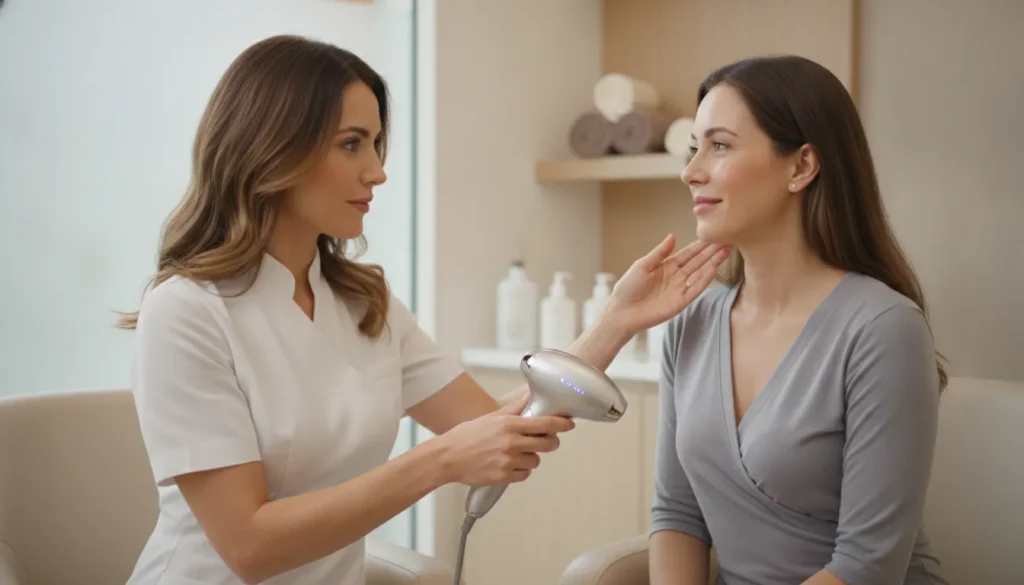

If you are looking for a dermatologist for microneedling, start with the evaluation rather than the device name. A thoughtful provider connects your goals with your skin history, current concerns, healing factors, and realistic expectations. That approach matters for patients in Houston, Richmond, Katy, Sugar Land, and nearby Fort Bend County communities.
Call Wilmarwell at (832) 495-7404 to discuss your microneedling goals.
A dermatologist for microneedling can assess skin concerns, medical history, healing considerations, and treatment goals before recommending care. Microneedling creates controlled micropunctures that may support collagen and elastin remodeling, but the appropriate approach, recovery, and expected results vary from person to person.
Not every cosmetic concern requires a dermatology practice. Some patients may be well served by a medically supervised medical spa when the practice explains its clinical oversight, provider roles, screening process, sterile technique, and follow-up. Others may need a dermatologist when they have an active skin condition, an unclear diagnosis, or a complicated history.
What Should a Dermatologist for Microneedling Evaluate First?
The first evaluation should connect your goals with your skin condition, medical history, current products, previous procedures, and ability to heal. A careful provider checks for active irritation or infection and explains whether microneedling is appropriate now, should be modified, or should wait until another concern is addressed.
A consultation should begin with the result you hope to support, not with a preset package. Explain whether you are concerned about acne-scar appearance, rough texture, fine lines, enlarged-looking pores, uneven tone, or general skin rejuvenation. These concerns can overlap, but they are not interchangeable. The provider should examine the treatment area and explain which goals microneedling may reasonably address.
Clarify the concern being treated
Use specific language when describing your concern. Smoother skin might mean shallow acne scars, roughness, fine lines, or a more even-looking tone. Ask how progress will be discussed. Some practices use photographs, visual comparisons, or a follow-up conversation. A responsible plan does not promise that every mark will disappear.
Microneedling is minimally invasive. It uses fine needles to create controlled punctures in the skin. Clinical references describe it as an option for some scars and uneven skin tone. The NCBI clinical overview of microneedling, American Academy of Dermatology guidance, and Cleveland Clinic treatment information support individualized treatment discussions rather than presenting the procedure as a universal fix.
Review skin history and active concerns
The provider should ask about previous procedures, sensitivity, pigment changes, cold sores, unusual scarring, keloid history, current acne, open lesions, and any active irritation or infection. Mention recent flare-ups, rashes, or unexplained changes. An examination can help distinguish a cosmetic texture concern from a condition that needs another kind of medical evaluation.
Do not assume treatment should proceed simply because an appointment is available. If the skin is irritated or the concern is unclear, the safest next step may be to delay treatment or seek evaluation from a clinician with the appropriate diagnostic scope. A qualified provider should be comfortable explaining that decision.
Discuss medications, healing, and expectations
Bring a complete list of prescription medicines, over-the-counter products, and supplements. Your provider should ask about factors that may affect bleeding, inflammation, infection risk, or healing. Do not stop a prescribed medicine because a treatment checklist suggests it. Ask the treating clinician how your current medicines and products affect the plan.
The consultation should also cover expected redness, swelling, sensitivity, aftercare, sun protection, and the possibility that improvement develops gradually. Microneedling is often described as having minimal downtime, but recovery is not identical for every person or every treatment plan. Ask what to expect during the first day, the first several days, and the period before another session is considered.
How Do You Choose a Dermatologist for Microneedling in Houston?
Choose a provider by matching clinical training and setting to your skin concern. A dermatologist may be especially appropriate when you need diagnosis or have a complicated skin history. A medically supervised medical spa may fit an individualized skin-remodeling goal when its oversight, screening, sterile technique, procedure roles, and follow-up process are clearly explained.
Searching for a dermatologist for microneedling does not mean every person needs a dermatologist. It does mean you should understand what the provider is qualified to evaluate and what happens if the concern falls outside that provider’s role. Ask direct questions before booking rather than relying on a title, a device name, a social media result, or a dramatic before-and-after image.
| Provider setting | Potential strength | Questions to clarify |
|---|---|---|
| Dermatology practice | Medical training focused on skin conditions and treatment planning | Who evaluates the concern, and how are diagnoses, active conditions, or medication questions handled? |
| Medically supervised medical spa | Structured aesthetic care with clinical oversight and treatment customization | Who provides oversight, who performs the procedure, and what is the escalation process? |
| Aesthetician-led skin care | Skin-care education and cosmetic maintenance within the permitted scope | Is the proposed service within the provider’s scope, and when is a medical referral made? |
Look at training and assessment scope
A dermatologist has medical training focused on skin conditions and can evaluate whether a concern may involve an active condition. This can be valuable when a mark has changed, symptoms are difficult to identify, or routine care has not helped. It does not mean every cosmetic texture concern requires a dermatologist. It does make provider scope an important part of the decision.
In a medically supervised medical spa, the consultation should still go beyond choosing a device or booking an appointment. The team should ask about your skin history, current products and medications, healing concerns, previous procedures, and the result you hope to support. Wilmarwell’s clinical services are provided in a medical spa setting under RN supervision. That is different from claiming Wilmarwell is a dermatology practice, and the distinction should be clear to readers.
Ask about safety and escalation
Ask how the treatment area is prepared, whether single-use components are used when applicable, how equipment is handled, and what aftercare instructions you will receive. You should also know whom to contact if your recovery differs from what was discussed. A practice that answers these questions clearly is easier to evaluate than one that focuses only on a package or a photo.
If you have an active skin problem, a history of unusual scarring, significant healing concerns, or uncertainty about a diagnosis, ask whether a qualified medical professional should evaluate you first. The answer may be a modified plan, a delay, or a referral. Transparent boundaries are a stronger sign of responsible care than a promise that one provider or device is right for everyone.
Confirm consultation and follow-up
Good care includes a plan for what happens after the procedure. Ask whether you will receive written aftercare, which symptoms are expected, which changes should prompt a call, and when the practice wants to review your progress. Clarify who answers questions after treatment and whether future sessions depend on how your skin responds.

How Does Treatment Planning Change for Scars, Texture, and Skin Tone?
Microneedling plans can differ based on whether the primary concern is acne-scar appearance, rough texture, fine lines, or uneven tone. The provider may adjust treatment areas, settings, spacing, recovery guidance, and follow-up expectations after examining your skin. An assessment is more useful than choosing a fixed plan from a general menu.
Microneedling is not a one-setting treatment. The goal you bring to the consultation helps shape the conversation about treatment areas, device settings, expected recovery, and how progress will be reviewed. Wilmarwell’s microneedling overview explains general concepts, while the microneedling process and benefits guide provides additional educational context. Neither replaces an individualized assessment.
Acne-scar appearance may require a targeted discussion
Acne scars vary. A provider may consider whether the concern is primarily uneven texture, shallow depressions, discoloration, or a combination. The plan should also account for current skin condition. Active irritation, an infection, or a recent flare may need attention before microneedling is considered.
Ask how the practice will discuss a series of treatments without guaranteeing a predetermined number of sessions. Some people may discuss multiple appointments, while others may need a different approach or additional time between sessions. The objective is to make each treatment appropriate for the skin in front of the provider.
Texture and fine lines may have different priorities
When the main concern is rough texture, enlarged-looking pores, or fine lines, the discussion may focus on overall collagen remodeling and how evenly the skin responds. A provider may balance the desired treatment effect with a recovery period that fits your schedule. Treatment for a small area may not be identical to treatment across the face.
Temporary redness or swelling can occur even when downtime is limited. Ask what is realistic for work, exercise, makeup, and sun exposure. Results develop gradually as the skin repairs and remodels, rather than appearing overnight. The provider should explain what improvement may look like and what the treatment cannot guarantee.
Uneven tone deserves careful assessment
For uneven tone or the appearance of hyperpigmentation, ask about your history of pigment changes, current skin-care products, sun exposure, and any tendency toward prolonged discoloration after irritation. Those details may affect whether treatment is appropriate at that time and how conservatively the session is planned.
The goal is to support a more even appearance without treating every skin tone or pigment concern as if it were the same. A careful provider will discuss sun protection and aftercare as part of the plan, not as an afterthought. You can also compare this angle with Wilmarwell’s realistic microneedling timeline while keeping expectations individualized.
What Should Houston-Area Patients Know About MDPEN Ultra?
MDPEN Ultra is a microneedling device used as one part of a treatment plan. The device name does not replace an assessment, and it does not guarantee a particular result. Ask how the provider matches MDPEN Ultra treatment to your goals, skin history, treatment area, tolerance, and follow-up needs.
For patients in Richmond, Katy, and nearby Fort Bend County communities, local convenience can make consultations and follow-up easier. Wilmarwell offers MDPEN Ultra microneedling in a medical spa setting under RN supervision. The practice describes the service as a clinical skin-remodeling option. Treatment choices may include microneedling with PRP or targeted serums, depending on the plan.
Patients can review the MDPEN Ultra microneedling service page to understand the service context. Use that information as a starting point for questions, not as a substitute for an individualized consultation. Device selection should follow an evaluation of your goals, skin history, active concerns, and recovery expectations.
Ask how the device fits your goals
Ask which concern the provider is assessing, how the device will be used for that concern, and whether the approach changes for sensitive areas or previous treatments. You should understand what the provider can reasonably discuss about texture, tone, scars, or signs of aging without promising a specific outcome.
Clarify who evaluates and oversees care
Before booking, confirm who reviews your medical and skin history, who performs the treatment, and how questions or unexpected concerns are handled afterward. Wilmarwell’s available business information identifies RN supervision, but readers should still confirm current procedure roles and the care process during their consultation.
Look for practical follow-up
Ask what normal post-treatment changes may look or feel like, what downtime is realistic, and when the provider wants to review your progress. You can also ask whether microneedling with PRP in Richmond, TX is relevant to your goals. A thoughtful practice leaves room for reassessment rather than presenting one fixed depth, schedule, or outcome.
What Questions Should You Ask Before Booking Microneedling in Houston?
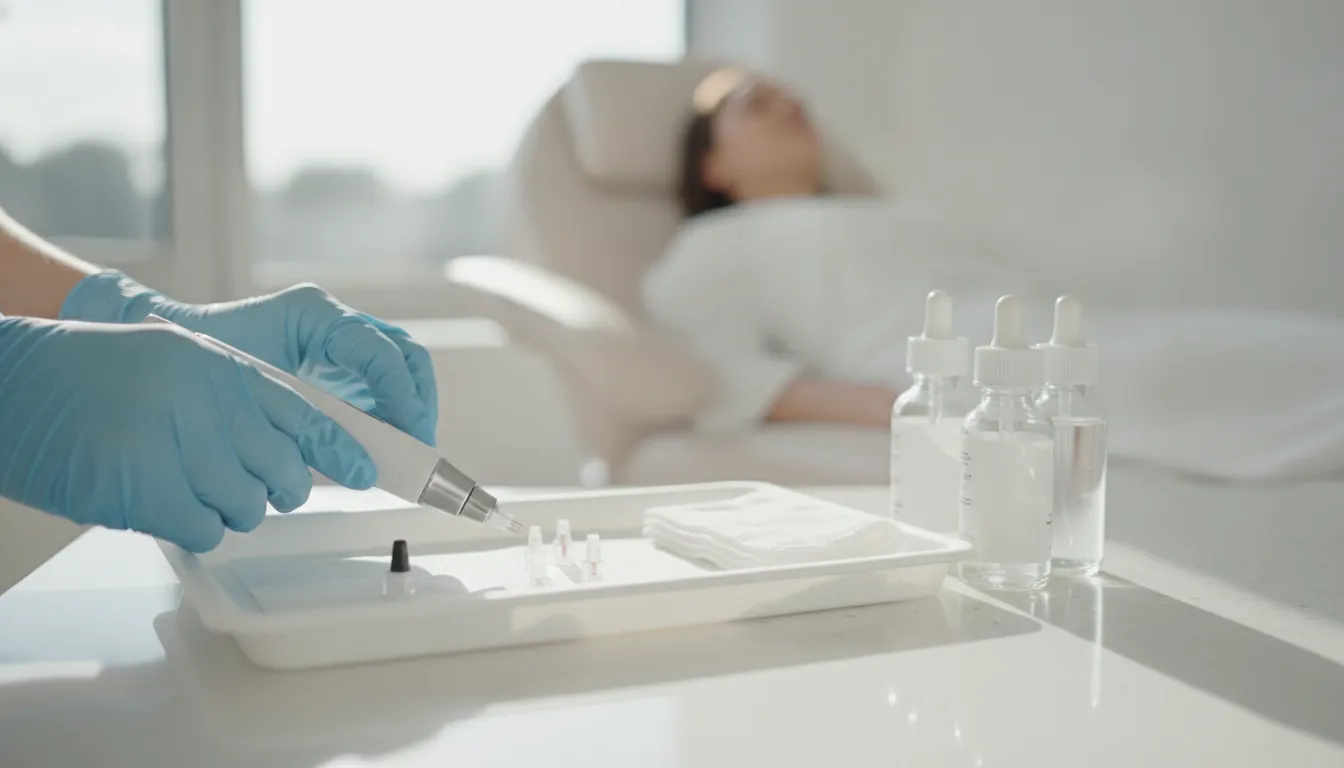
Before booking, ask who evaluates your skin, who performs the procedure, which concern the plan addresses, how your history affects treatment, what recovery may involve, and how follow-up works. The answers should be specific to your situation rather than copied from a general treatment menu.
-
Who will evaluate my skin, and who will perform the treatment? Ask about the training and role of each person involved. If you are searching for a dermatologist for microneedling, ask how clinical oversight works before, during, and after the procedure.
-
What skin concern are we actually treating? Clarify whether the plan addresses texture, fine lines, uneven tone, acne-scar appearance, or another concern. Ask how progress will be discussed and what would be realistic for your skin.
-
Which device will you use, and why is it appropriate for me? The device is one part of treatment quality. Ask how settings are selected, how the provider controls the treatment, and why the approach fits your goals. Wilmarwell uses MDPEN Ultra in its clinical microneedling treatments.
-
How does my skin history change the plan? Tell the provider about current products, medications, previous procedures, active skin issues, healing concerns, and any history that may affect treatment. Ask which preparation and aftercare instructions apply to you.
-
What downtime should I realistically expect? Ask how your skin may look and feel immediately afterward, how long redness or sensitivity may last, and when normal activities can resume. Be cautious of promises of instant or guaranteed results.
-
What aftercare will I receive? Confirm which cleanser, moisturizer, sunscreen, and other products are appropriate after treatment. Ask what symptoms are expected, which changes should prompt a call, and whom to contact with a concern.
-
When will we follow up? Ask whether the clinic schedules a review, how future treatments will be decided, and whether a different service or referral may be appropriate if your skin responds differently than expected.
-
What alternatives should I consider? A responsible consultation may discuss waiting, changing your home routine, or choosing another professional treatment. The best choice fits your skin, schedule, comfort level, and expectations.
Use the answers to compare providers
Write down the answers you receive so you can compare practices on the same points. A clear response should explain the evaluation, treatment roles, recovery expectations, aftercare, and follow-up. It should also acknowledge when the provider cannot diagnose a concern or when another clinician should be involved.
Wilmarwell’s services overview can help you understand the broader medical spa setting. The About page adds background on the practice. If you want to review examples of treatment results, the before-and-after gallery should be treated as illustrative rather than a promise of what every patient will experience.
When Is a Consultation the Right Next Step?
A consultation is the right next step when you want to compare providers, have questions about whether microneedling fits your skin, or need a plan that accounts for your history and schedule. It can clarify whether an RN-supervised medical spa or a dermatology practice is the more appropriate place to begin.
Start by asking who evaluates your skin, who performs the treatment, and how clinical concerns are handled. A qualified provider should discuss your goals, skin history, current conditions, medications, healing concerns, and previous treatments. That conversation helps determine whether microneedling is appropriate and whether another approach should be considered first.
Look for a plan that is specific without pretending to predict an exact outcome. Microneedling may support collagen and elastin remodeling and may be considered for concerns such as acne-scar appearance, uneven tone, and texture. Results and recovery vary. A responsible provider should explain what gradual improvement may look like, what temporary redness or swelling could occur, and why treatment spacing may depend on your skin and goals.
For patients near Richmond, Houston, Katy, or Sugar Land, local access matters because follow-up is easier when the practice is convenient. Wilmarwell provides clinical skin-remodeling treatments in a Richmond medical spa setting under RN supervision. Its contact information can help you ask treatment-specific questions without assuming that a medical spa is the same as a dermatology practice.
Call Wilmarwell at (832) 495-7404 to ask about a microneedling consultation.
Frequently Asked Questions
Do I need a dermatologist for microneedling?
Not everyone needs a dermatologist for a cosmetic microneedling consultation. A dermatologist may be especially appropriate when you have an unclear or changing skin concern, active skin disease, a complicated medical history, or unusual healing concerns. A medically supervised medical spa may be appropriate for an individualized cosmetic plan when its clinical oversight, provider roles, screening, and follow-up are clear. Ask who evaluates your skin and when referral is recommended.
Is microneedling appropriate for acne-scar appearance?
Microneedling may be considered for some acne-scar concerns, but suitability depends on the type of scar, current skin condition, treatment area, and individual healing factors. Active irritation or infection may need attention first. A provider should explain what improvement is realistic, how progress will be evaluated, and whether another treatment or referral would be more appropriate.
What is MDPEN Ultra microneedling?
MDPEN Ultra is a microneedling device used as part of a clinical treatment plan. The device creates controlled micro-injuries in the skin, while the provider determines whether and how it fits your goals, skin history, treatment area, and recovery expectations. A device name alone does not guarantee results. Ask about the evaluation, procedure roles, settings, aftercare, and follow-up.
How much downtime should I expect after microneedling?
Many people experience temporary redness, sensitivity, or swelling after microneedling, but recovery varies by person and treatment plan. Ask how long visible changes may last, which activities or products to avoid, how to protect your skin from the sun, and which symptoms should prompt a call. Your provider should give individualized aftercare rather than relying only on a general promise of minimal downtime.