Fine lines can show up before you feel ready for them, and it is reasonable to ask whether microneedling for wrinkles can make a meaningful difference. Professional microneedling may support smoother-looking texture and softer-looking fine lines by prompting a controlled skin-repair response. It does not erase every wrinkle or replace a consultation, however. The right plan depends on whether your lines are mainly related to skin texture, repeated muscle movement, volume changes, or laxity.
Call Wilmarwell at (832) 495-7404 to discuss whether microneedling fits your wrinkle-related goals.
What can microneedling do for wrinkles?
Microneedling can create controlled micro-injuries that support the skin’s natural remodeling response. For some people, that process may improve the appearance of fine lines, uneven texture, and mild crepey skin over time. Results vary, and professional treatment is intended to soften the look of selected concerns, not promise wrinkle removal.
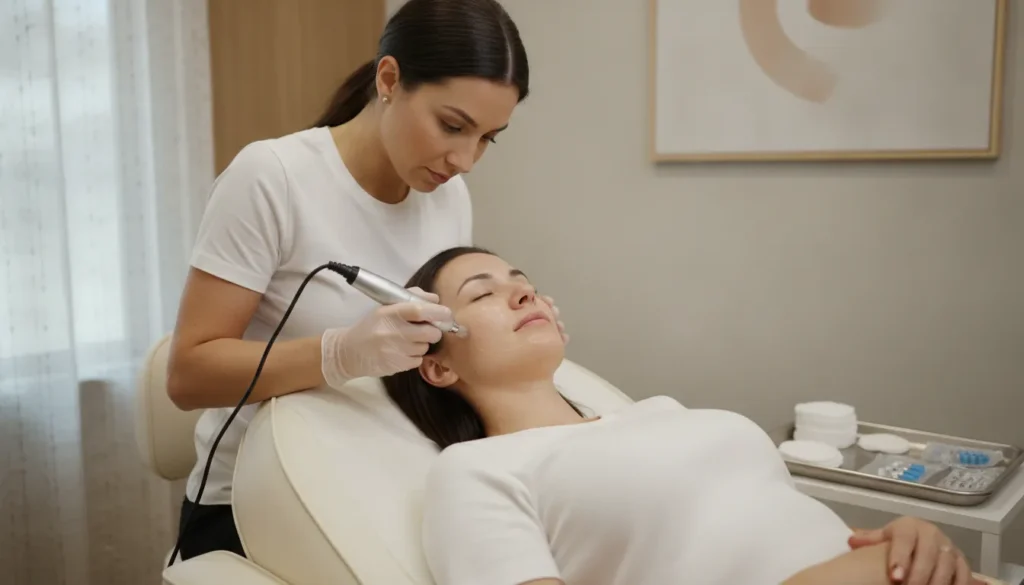
Microneedling is also called collagen induction therapy. A trained provider uses a pen-style device with fine needles to create a pattern of tiny, controlled openings in the skin. The treatment does not add volume and does not temporarily relax facial muscles. Its role is to support the skin’s own repair and remodeling process.
That distinction matters when you are choosing a treatment. A wrinkle caused mostly by surface texture may be a reasonable topic for a microneedling consultation. A deep fold caused by volume loss or a line that appears mainly with facial movement may require a different conversation.
Which wrinkle concerns may respond to microneedling?
The best fit is usually a concern where skin quality and texture are part of the picture. Your provider can assess the area, the depth and pattern of the lines, your skin history, and your goals before discussing settings or a series of treatments.
- Fine lines: Early or fine lines may look softer as the surrounding skin becomes more even and supported.
- Crepey texture: Mild crepey-looking skin may benefit when texture and surface quality are the primary concerns.
- Sun-related texture changes: Uneven texture associated with visible photoaging may be considered as part of a broader skin-renewal plan.
- Lines alongside acne scarring or enlarged pores: When wrinkles occur with other textural concerns, a customized plan may address more than one surface issue.
- Fine lines on selected facial zones: Treatment depth and approach can be adjusted by area rather than assuming every part of the face should be treated the same way.
These are potential treatment conversations, not guarantees. A qualified provider should first determine whether the skin is healthy enough for treatment and whether the concern is one microneedling is suited to address.
How does microneedling work on facial wrinkles?
Microneedling works on facial wrinkles by creating controlled micro-injuries that signal the skin’s natural healing process. That response can involve collagen and elastin remodeling, which may gradually support a smoother-looking surface. The treatment does not physically fill a fold or stop the muscle movement that creates a dynamic line.
The U.S. Food and Drug Administration explains that microneedling devices use small needles to puncture the skin and that legally marketed uses include improving the appearance of facial wrinkles for certain patients and devices. The FDA also emphasizes that risks and authorized uses vary, so device selection, treatment area, provider training, and patient screening matter.
Clinical evidence is encouraging but should be read carefully. One study of a microneedling device evaluated four monthly treatments in adults with facial wrinkles and reported improvement in blinded assessments at follow-up. A study summary is available through PubMed. That result does not predict the outcome for every person, and it does not mean every device, depth, skin type, or treatment plan is interchangeable.
Who may be a candidate for wrinkle-focused microneedling?
A potential candidate is an adult with realistic goals, generally stable skin, and fine lines or texture concerns that may respond to collagen-focused remodeling. Candidacy is not determined by age alone. It is determined through a review of the treatment area, medical history, current skin condition, medications, prior procedures, and the type of wrinkle being addressed.
During a professional consultation, ask about:
- Your primary concern and which areas you want to improve.
- Whether the lines are present at rest, with movement, or both.
- Any active irritation, rash, infection, inflammatory flare, or open skin in the treatment area.
- Medications, supplements, allergies, healing history, and prior reactions.
- How your skin responds to procedures and whether you have a history of abnormal scarring.
- Your timing, comfort preferences, and ability to follow aftercare guidance.
Wilmarwell describes its MDPEN Ultra service as a customized microneedling treatment with options that may include targeted serums, gels, or PRP. The MDPEN Ultra microneedling service page provides the service-specific details. A Good Faith Exam and clinical screening help determine whether the treatment is appropriate for your situation.
What can microneedling not address well?
Microneedling has limits because it improves skin quality rather than correcting every cause of a wrinkle. Deep folds, significant volume loss, pronounced laxity, and movement-driven lines may not change substantially from microneedling alone. A consultation can clarify whether microneedling is a reasonable standalone option, part of a broader plan, or not the best match for the concern.
| Concern | Why microneedling may be limited | What a consultation may discuss |
|---|---|---|
| Fine lines and uneven texture | Often connected to skin quality, so remodeling may be relevant. | Microneedling candidacy, settings, and a personalized plan. |
| Lines that deepen with facial movement | Microneedling does not relax the underlying muscle. | Whether a neurotoxin discussion is more relevant for that pattern. |
| Deep folds or volume-related creases | Microneedling does not replace lost volume. | Whether a volume-restoration conversation, including Versa filler, is appropriate. |
| Pronounced sagging or laxity | Skin remodeling may not provide the degree of tightening someone expects. | Other options, expectations, and whether treatment should be deferred. |
| Active inflammation or infection | Treating compromised skin can increase risk and may worsen irritation. | Stabilizing the skin and receiving clinical clearance first. |
If movement-related lines are the main concern, Wilmarwell’s neurotoxin service information can help you understand a separate treatment category to ask about. If volume changes are part of the concern, review the dermal filler service information and discuss whether Versa is suitable. These links are educational starting points, not a recommendation to combine or choose any treatment without clinical review.
What does a wrinkle-focused treatment plan involve?
A wrinkle-focused microneedling plan starts with diagnosis rather than a preset depth or promise. The provider should identify the kind of wrinkle, examine the skin, review safety factors, and explain what the treatment can and cannot reasonably change. The plan can then be adjusted to the treatment area, skin response, comfort, and goals.
- Define the concern: Separate fine lines, texture, laxity, volume changes, and movement-related lines instead of labeling every crease the same way.
- Review health and skin history: Discuss current conditions, medications, sensitivities, healing history, and recent procedures.
- Choose a focused approach: The provider determines whether the area, depth, and treatment additions are appropriate for the concern.
- Set an honest baseline: Discuss likely improvement in terms of appearance and skin quality, not perfection or a guaranteed number of years younger.
- Plan follow-up: Review how the skin responds and whether the original concern is improving before discussing additional treatment.
For an overview of the sensation, preparation, and recovery questions people often have, see Wilmarwell’s guide to whether microneedling hurts. Preparation and aftercare should follow the instructions provided for your specific treatment and skin history.
How should you judge the outcome?
Judge a wrinkle-focused treatment by whether the change matches the original concern, not by whether every line disappears. Useful measures include smoother-looking texture, a more even surface, improved makeup application, and whether the result still looks like you. Provider photographs, consistent lighting, and a defined follow-up plan can make subtle changes easier to evaluate.
There is no universal session count or maintenance schedule that applies to everyone. Skin response, treatment area, baseline condition, and the scope of the goal all influence planning. For a separate discussion of how people evaluate changes over time, see the microneedling before-and-after timeline guide, while keeping in mind that another person’s timeline is not a promise for your result.
Be cautious with any provider or advertisement that guarantees wrinkle removal, identical results, or a fixed outcome. A medically responsible plan includes uncertainty, alternatives, possible side effects, and a clear point at which the plan will be reassessed.
What should you ask before choosing microneedling for wrinkles?
Bring specific questions to your consultation so you can compare the proposed treatment with your actual concern. Ask:
- What type of wrinkle or texture change are we trying to improve?
- What can microneedling realistically change in this area, and what will it not change?
- Why is this device and treatment approach appropriate for my skin?
- What health conditions, medications, or recent procedures could affect candidacy?
- What signs would mean the treatment should be delayed or adjusted?
- How will we evaluate whether the plan is helping?
- What alternative treatment category should I ask about if the main issue is movement, volume, or laxity?
These questions keep the decision focused on the cause of the wrinkle and the quality of the care plan, rather than on a generic promise that one procedure works for everyone.
Frequently Asked Questions
Does microneedling get rid of wrinkles?
No. Microneedling may soften the appearance of some fine lines and improve texture, but it does not guarantee wrinkle removal. Its potential benefit comes from supporting skin remodeling, so the outcome depends on the wrinkle type, skin condition, treatment plan, and individual response.
Is microneedling good for deep wrinkles?
Microneedling may be less effective when a deep wrinkle is primarily caused by volume loss, pronounced laxity, or repeated muscle movement. A professional assessment can determine whether microneedling is relevant and whether another treatment category should also be discussed.
How many microneedling treatments are needed for wrinkles?
There is no single treatment count that fits every person. The number and spacing of treatments depend on the area, the starting condition of the skin, the treatment settings, and how the skin responds. Your provider should explain the plan without guaranteeing a specific result.
Can I get microneedling if I have irritated or inflamed skin?
Active irritation, infection, an open lesion, or an inflammatory flare may be reasons to delay treatment or seek clinical clearance. Share your current skin condition and relevant medical history during the consultation so the provider can make a safety-focused decision.
Is professional microneedling safe?
Professional microneedling still has risks, including redness, dryness, itching, burning, bruising, pigment changes, and infection. The FDA recommends discussing benefits and risks with a trained provider. Screening, sterile single-use cartridges, appropriate device use, and clear aftercare are important parts of a responsible plan.