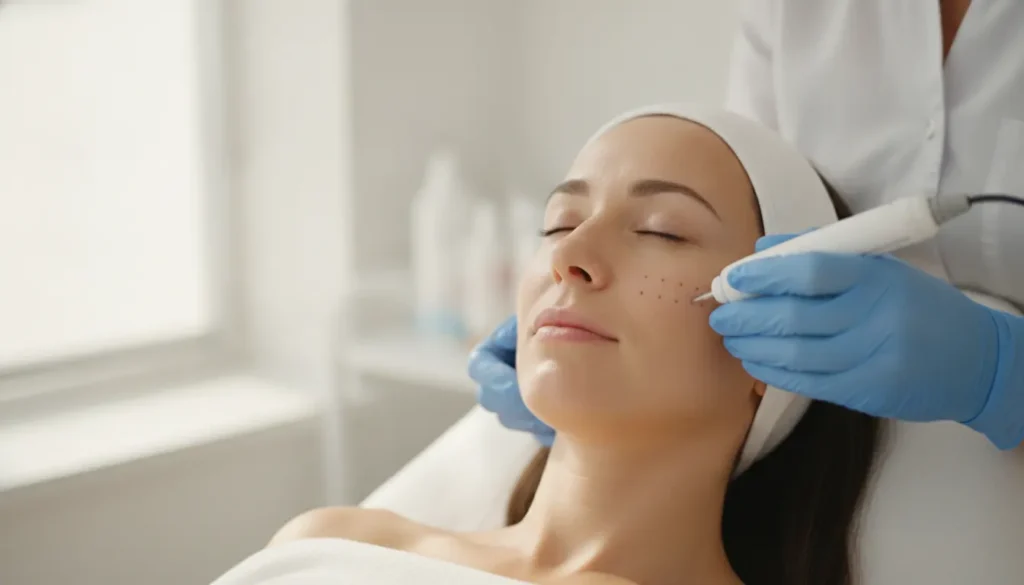
Fine lines, uneven texture, and loss of firmness are common signs that the skin’s natural repair processes have begun to slow. For residents of Fort Bend County seeking a nonsurgical solution, MDPEN Ultra microneedling at Wilmarwell offers a clinically proven approach to collagen induction therapy that restores healthy skin architecture from the inside out. Unlike topical treatments that only address the surface, this medical-grade device delivers controlled micro-injuries at precise depths, triggering the body’s innate wound-healing cascade to produce new collagen and elastin fibers.
Schedule your microneedling Richmond TX consultation at Wilmarwell and take the first step toward smoother, more radiant skin under the supervision of our registered nursing team.
For individuals searching for microneedling Richmond TX, Wilmarwell delivers the MDPEN Ultra system — a precision-engineered medical device that creates controlled micro-injuries to initiate the skin’s natural collagen and elastin production. Clinical research confirms this method significantly reduces the appearance of acne scars, fine lines, enlarged pores, and textural irregularities while improving overall skin quality (PubMed). Our Richmond clinic provides 60-minute sessions under RN supervision, combining medical expertise with a luxury spa environment for optimal safety and comfort.
Understanding how this advanced technology works and what sets it apart from conventional alternatives is essential before committing to treatment. Below, we break down the science, the clinical protocol, and the expected outcomes so you can make an informed decision.
What Is MDPEN Ultra Microneedling and How Does It Work in Richmond, TX?
MDPEN Ultra Microneedling is a medical-grade collagen induction therapy system that uses a motorized pen device with sterile, single-use needle cartridges. The device creates precise, vertical micro-channels in the dermis at depths calibrated to each treatment area. This mechanical stimulus activates fibroblast activity and triggers the release of growth factors, including transforming growth factor-beta (TGF-beta) and platelet-derived growth factor (PDGF), which orchestrate tissue remodeling (PubMed).
The biological mechanism of collagen induction
When the MDPEN Ultra creates these controlled micro-injuries, the epidermis remains largely intact while the dermis receives targeted stimulation. The body responds by initiating the inflammatory phase of wound healing, during which fibroblasts proliferate and secrete procollagen. Over the following weeks, this procollagen matures into cross-linked collagen fibers that restore tensile strength and elasticity to treated skin. Elastin fibers, responsible for the skin’s ability to snap back after stretching, also increase in density and organization.
This biological cascade continues for three to six months post-treatment, meaning the visible improvements compound over time. Unlike topical collagen creams that cannot penetrate beyond the stratum corneum, microneedling stimulates endogenous collagen production at the structural level where it actually matters for skin firmness and volume.
Precision depth control and safety engineering
The MDPEN Ultra distinguishes itself through its adjustable needle depth system, which allows clinicians to dial in exact penetration based on anatomical location. Perioditial skin, which measures roughly 0.5 mm in thickness, requires shallower settings, while the malar cheeks and forehead can tolerate depths of 1.5 to 2.0 mm. This zone-specific approach maximizes therapeutic effect while minimizing trauma to delicate areas.
The device operates with a high-speed oscillating mechanism — over 10,000 revolutions per minute — that minimizes drag and patient discomfort. Each session uses fresh, sterile needle cartridges that maintain sharpness and eliminate cross-contamination risk. This level of engineering precision makes the MDPEN Ultra markedly safer and more comfortable than manual derma-rolling at home, where uneven pressure and non-sterile conditions can lead to epidermal tearing, inconsistent depth, and bacterial introduction.
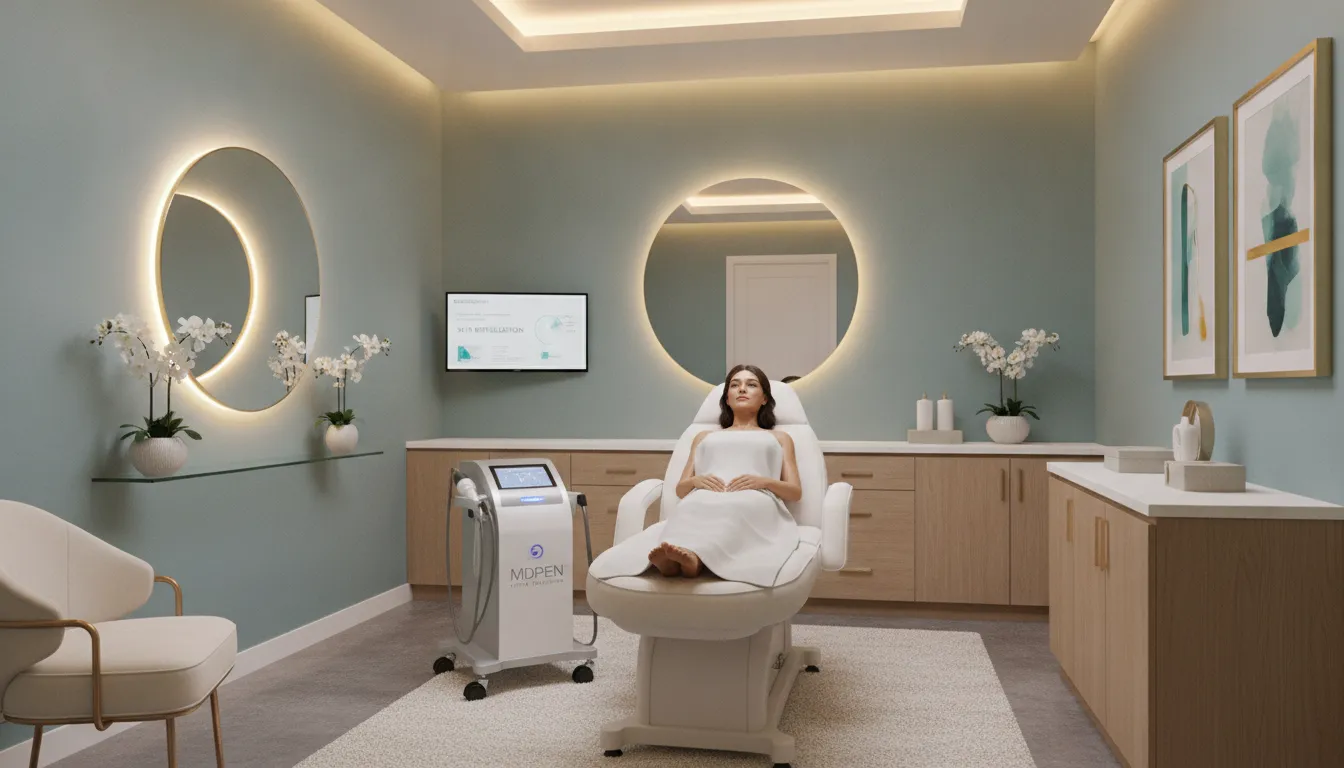
Expertise you can trust in Richmond, TX
Wilmarwell Aesthetics and Wellness, founded in 2017 by Margaret C. Okudo, RN, serves the Richmond, Katy, and Sugar Land communities with a uniquely integrated approach to medical aesthetics and holistic wellness. Every microneedling session begins with a Good Faith Exam conducted by our registered nursing team to confirm candidacy and rule out contraindications. Our RN-led model ensures that every treatment meets medical standards for safety, hygiene, and clinical efficacy — a standard that separates medical-grade microneedling from cosmetic-only alternatives.
To learn more about the technology and its clinical applications, visit our MDPEN Ultra Microneedling service page.
What Happens During a Microneedling Consultation at Wilmarwell?
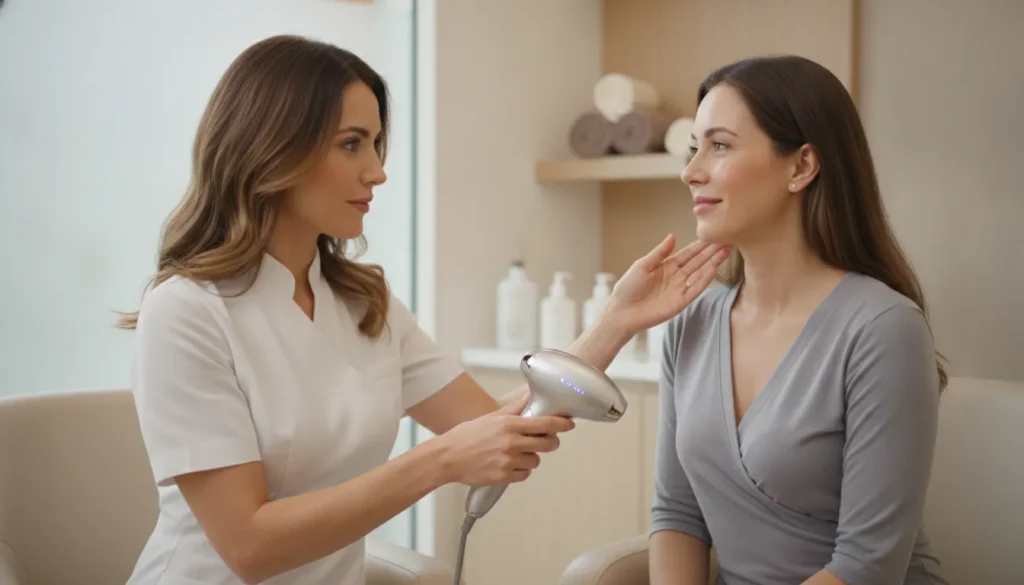
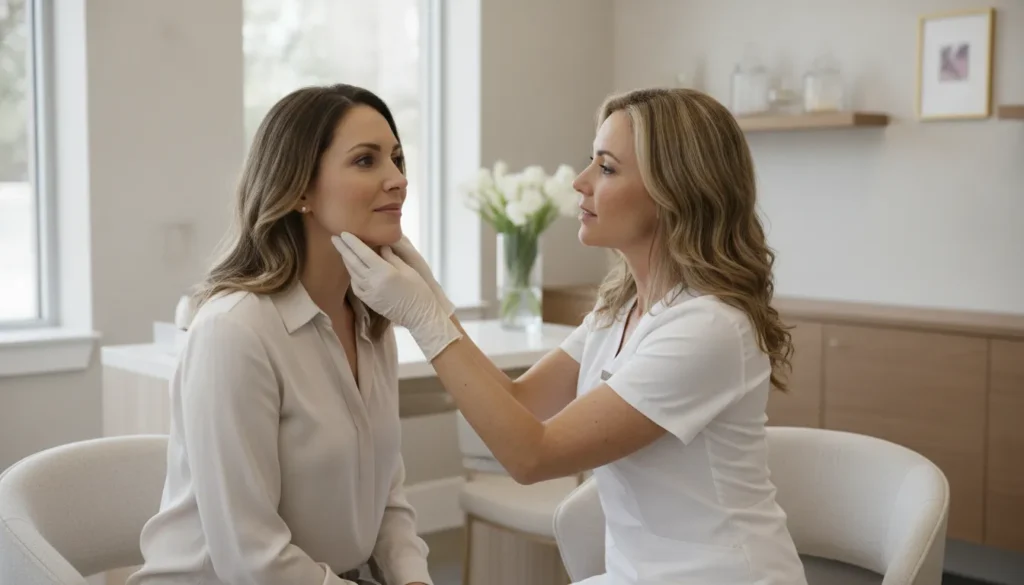
A thorough consultation is the foundation of every successful treatment plan. At Wilmarwell, your initial visit involves a comprehensive skin assessment that goes deeper than a standard cosmetic consultation. We evaluate skin type, Fitzpatrick grade, current product regimen, medical history, and aesthetic goals before recommending a protocol.
Medical screening and Good Faith Exam
Texas regulations require a Good Faith Exam before any medical aesthetic procedure, and Wilmarwell adheres to this standard without exception. During this exam, your RN provider reviews your full health history — including any bleeding disorders, autoimmune conditions, current medications (particularly anticoagulants), and previous cosmetic treatments. This assessment ensures that microneedling is appropriate for your specific physiology and that no contraindications exist. Patients with active acne lesions in the treatment area, a history of keloid scarring, or who are pregnant or nursing may need to postpone treatment.
Crafting your personalized treatment protocol
Based on your consultation findings, your provider designs a treatment protocol tailored to your unique skin architecture. We assess the severity of fine lines using the Glogau photoaging classification, evaluate acne scarring with the Goodman and Baron grading system, and document baseline pore size and texture. This helps us make a plan that addresses your specific concerns with clinical precision. We may recommend adjunctive therapies such as PRP (platelet-rich plasma) or PRF (platelet-rich fibrin) to amplify growth factor delivery, or a series of 3 to 4 sessions spaced 4 to 6 weeks apart for optimal remodeling.
Questions to ask during your consultation
We encourage every patient to arrive with questions. Common topics include the expected degree of improvement for specific concern areas, the realistic downtime for your skin type, the number of sessions required to achieve your goal, and how maintenance treatments extend results over time. Your provider will explain exactly how collagen induction therapy works at the cellular level and what you can expect at each stage of the healing process. We also discuss pricing and the Cherry 0% APR financing options available to make treatment accessible.
What Skin Concerns Can MDPEN Ultra Microneedling Address?
MDPEN Ultra microneedling is one of the most versatile tools in medical aesthetics, with demonstrated efficacy across a broad spectrum of dermal concerns. By stimulating the skin’s intrinsic repair mechanisms, it addresses both structural and superficial issues that topical regimens alone cannot resolve.
Fine lines and dynamic wrinkles
Collagen depletion is the primary driver of visible aging. Microneedling restores collagen density by upregulating fibroblast activity, which progressively fills in fine lines and softens deeper wrinkles. Patients typically notice the most significant improvement in periorbital crow’s feet, forehead furrows, and nasolabial fold softening after completing a treatment series.
Acne scars and textural irregularities
Rolling and boxcar acne scars — the most common types seen in clinical practice — respond particularly well to microneedling. The treatment breaks down fibrotic scar tissue and replaces it with organized collagen bundles, resulting in a smoother, more uniform skin surface. Combined with PRP, patients with grade 3 to 4 atrophic scarring often see 40 to 60 percent improvement after 4 to 6 sessions, based on published clinical outcomes.
Dull complexion and hyperpigmentation
Photodamage and cumulative environmental stress leave skin looking lackluster and uneven. Microneedling results in Richmond, TX demonstrate significant improvement in skin radiance and tone evenness. The micro-channels also enhance topical product absorption by up to 300 percent for 24 to 48 hours post-treatment, making it an ideal partner for brightening serums and pigment inhibitors.
Comparative efficacy: microneedling versus alternate modalities
Each skin concern has multiple treatment pathways, but MDPEN Ultra occupies a distinctive position at the intersection of efficacy and minimal downtime. The table below compares microneedling against other common modalities for typical aesthetic goals.
| Concern | MDPEN Ultra Microneedling | Chemical Peels | Microdermabrasion | Fractional Laser Resurfacing |
|---|---|---|---|---|
| Atrophic Scarring | High (4-6 sessions) | Low to Moderate | Low | High (1-3 sessions) |
| Fine Lines and Wrinkles | High (3-4 sessions) | Moderate | Low | High |
| Pigment Irregularity | Moderate to High | High | Moderate | High |
| Typical Downtime | 1-3 Days (erythema) | 3-7 Days (peeling) | None | 7-14 Days (swelling, crusting) |
| Fitzgerald Skin Types | All Types Safe | Varies (PIH risk) | Most Types | Varies (PIH risk in darker skin) |
Your provider will help you select the optimal modality — or combination of modalities — based on your skin type, concern severity, lifestyle constraints, and treatment goals. Microneedling with PRP benefits can further accelerate healing and amplify dermal remodeling for patients seeking maximal results.
Understanding the MDPEN Ultra Treatment Session
A well-executed microneedling session follows a structured clinical protocol. Understanding each phase helps patients feel confident and prepared on treatment day.
Pre-procedure preparation
Optimal outcomes depend on proper skin priming. Beginning five days before treatment, patients should discontinue retinoids, vitamin A derivatives, and any exfoliating acids (glycolic, salicylic, lactic) to prevent excessive sensitivity. Sun exposure should be minimized, as sunburned or irritated skin requires postponement. On treatment day, arrive with clean, bare skin — no makeup, moisturizer, or active serums. If you take blood-thinning medications or supplements (aspirin, ibuprofen, fish oil, vitamin E), consult your provider about holding them 24 to 48 hours before your appointment to reduce bruising risk.
Step-by-step treatment protocol
Your 60-minute session follows this clinical sequence:
- Good Faith Exam: Your RN confirms health status and treatment areas are appropriate for microneedling.
- Topical Anesthesia: A compounded lidocaine-numbing agent is applied for 20 to 30 minutes to ensure comfort throughout the procedure.
- Device Calibration: Your provider sets the MDPEN Ultra needle depth based on each treatment zone, from 0.25 mm for periorbital areas up to 2.5 mm for thicker dermal targets.
- Active Treatment: The provider moves the device in a systematic grid pattern across each zone, with 2 to 4 passes depending on the clinical goal. Serum or PRP may be applied between passes to infuse growth factors directly into the micro-channels.
- Post-Procedure Soothing: A hydrating, anti-inflammatory mask is applied to calm the skin and reduce transient erythema. A broad-spectrum mineral SPF is the final protective layer.
The addition of microneedling with PRP benefits can significantly accelerate the healing response by delivering concentrated platelet-derived growth factors directly to the treated dermis.
Comfort management and recovery expectations
Most patients describe the sensation as a light prickling or vibration, well-tolerated after topical anesthesia. Immediately post-treatment, the skin appears flushed — comparable to a moderate sunburn — with mild warmth that typically resolves within 24 to 48 hours. Pinpoint petechiae may be present and generally fade within 48 to 72 hours. Makeup can typically be applied the following day, though mineral-based formulations are preferred to avoid clogging micro-channels. These results progressively improve as neocollagenesis continues over the following months.
Essential Pre- and Post-Treatment Aftercare for Optimal Results
The quality of your aftercare directly determines the quality of your outcome. Microneedling is a minimally invasive procedure, and the skin remains in an active healing state for several days following treatment. Following these guidelines will protect your investment and maximize your results.
Pre-treatment skin preparation checklist
Five to seven days before your session, cease all retinoid-containing products (tretinoin, retinol, adapalene) and exfoliating acids. Avoid direct sun exposure and tanning beds. Discontinue blood thinners 24 hours prior (with your prescribing providers approval). On the morning of treatment, cleanse thoroughly and arrive with zero product on your skin. Hydrate well, eat a light meal, and avoid caffeine to minimize sensitivity during the procedure.
Immediate post-treatment protocol
For the first 24 to 48 hours, treat your skin with the same care you would a fresh wound. Cleanse gently with lukewarm water and a non-active, fragrance-free cleanser. Do not apply makeup for at least 24 hours. Avoid active ingredients — vitamin C, retinol, glycolic acid, benzoyl peroxide — for five to seven days. Sun protection is nonnegotiable: apply a mineral (zinc oxide or titanium dioxide) SPF 30 or higher every two hours if outdoors. Direct UV exposure on healing skin can precipitate post-inflammatory hyperpigmentation that undermines your results.
Long-term recovery and avoidance rules
For 48 hours post-treatment, avoid vigorous exercise, saunas, steam rooms, hot tubs, and swimming pools. Sweat and chlorinated water can introduce bacteria into the micro-channels and delay healing. Avoid touching or picking at the treated area. Stick to the gentle, hydrating products your provider recommends. Most patients return to their normal skin care routine within five to seven days. If you have questions during recovery, our Richmond team is available by phone to provide guidance.
For more details on complementary treatments, see how microneedling with PRP benefits can amplify your results.
How Many MDPEN Ultra Sessions Are Recommended for Optimal Results?
Collagen remodeling is a cumulative biologic process, not a single-event transformation. Most patients achieve their desired outcome following a series of 3 to 4 treatment sessions spaced 4 to 6 weeks apart. This interval aligns with the skin’s natural healing cycle, allowing each round of neocollagenesis to build on the previous one.
The cumulative benefit of a treatment series
Each session with the MDPEN Ultra triggers a fresh wave of fibroblast activation and procollagen deposition. Collagen induction therapy produces measurable improvements in dermal thickness and density, but these changes accrue incrementally. Patients often notice the first visible shift in skin radiance and texture three to four weeks after session one. Full architectural remodeling — reflected in firmer, smoother, more resilient skin — becomes apparent two to three months after completing the series.
Patients targeting deep acne scars or advanced photoaging may require 5 to 6 sessions. Those seeking improvement in early fine lines and mild textural dullness may achieve their goals with 2 to 3. Your provider will calibrate the protocol based on your baseline skin condition, concern severity, and desired outcome. Real microneedling results in Richmond, TX demonstrate the range of outcomes achievable with a properly sequenced treatment plan.
Maintenance protocol for lasting results
The new collagen your skin produces during a treatment series persists for 12 to 18 months, but intrinsic aging continues. To maintain your results, we recommend a single maintenance session every 6 to 12 months. This annual touch-up sustains dermal density and prevents the gradual re-accumulation of fine lines and laxity. Regular maintenance is significantly more cost-effective than repeating a full series from baseline.
Clinical evidence confirms that this approach is a safe and effective method for sustained skin quality improvement with minimal interruption to daily life. Your provider will design a long-term care plan that keeps your skin in its optimal state year after year.
Individualizing your treatment plan
Every patient presents with a unique combination of skin type, concern profile, and lifestyle factors. During your consultation, we assess these variables to develop a protocol specific to your biology. Some patients benefit from alternating microneedling sessions with complementary treatments such as medical-grade peels or LED photobiomodulation. Others may prefer to pair every session with PRP infusion for accelerated healing. Whether your goal is scar revision, wrinkle reduction, or overall skin rejuvenation, a structured series of treatments remains the evidence-based path to the clearest, smoothest, most radiant outcome.
Frequently Asked Questions
How much does microneedling cost in Richmond, TX?
The cost of microneedling in Richmond, TX varies based on your specific treatment plan, the number of sessions required, and whether adjunctive therapies such as PRP are included. At Wilmarwell, every treatment is supervised by an RN to ensure clinical safety and optimal results. The practice offers flexible payment plans through Cherry financing at 0% APR to make professional skin rejuvenation accessible. Visit wilmarwell.com for current pricing details.
Who is a good candidate for microneedling?
Adults aged 28 to 65 seeking improvement in acne scars, fine lines, enlarged pores, or overall skin texture are typically excellent candidates. The MDPEN Ultra device accommodates all Fitzpatrick skin types due to its adjustable depth settings, which minimize the risk of post-inflammatory hyperpigmentation. Ideal candidates have realistic expectations, are in good general health, and are not pregnant or nursing. A Good Faith Exam at Wilmarwell confirms individual candidacy before treatment.
Does microneedling hurt?
Most patients tolerate microneedling very well. Before your 60-minute session at Wilmarwell’s Richmond office, a compounded lidocaine-numbing cream is applied for 20 to 30 minutes to ensure comfort. During treatment, patients typically feel a mild vibration or light scratching sensation. The MDPEN Ultra system high-speed oscillation minimizes discomfort compared to manual devices. Post-procedure, the skin feels warm and appears flushed similar to a mild sunburn for 24 to 48 hours.
Is microneedling safe for all skin types?
Yes, professional microneedling is safe for all Fitzpatrick skin types when performed by a trained medical provider. The MDPEN Ultra adjustable needle depth allows precise control, preventing epidermal damage while still reaching the dermal layer for collagen stimulation. This precision is particularly important for darker skin types (Fitzpatrick IV-VI), where thermal-based treatments carry a higher risk of hyperpigmentation. Wilmarwell RN providers adjust every parameter to your skin type and sensitivity level.
How soon will I see results from microneedling?
Many patients notice an initial glow and improved skin texture within 1-2 weeks post-treatment, but the most significant results develop gradually over 3-6 months as neocollagenesis progresses. Each session builds on the previous one, with full architectural remodeling visible approximately 2-3 months after completing a series of 3-4 treatments. This cumulative improvement timeline reflects the natural pace of biologic collagen production and tissue reorganization.
Ready to Begin Your Skin Rejuvenation Journey at Wilmarwell?
MDPEN Ultra microneedling represents a proven, science-backed pathway to healthier, more resilient skin — without the downtime of surgical alternatives. Whether you are addressing fine lines, acne scarring, or simply want to restore your skin’s natural radiance, the team at Wilmarwell is ready to guide you through every step of the process. Our RN-supervised approach ensures that your treatment is both safe and effective, tailored to your unique physiology and aesthetic goals.
Book your microneedling Richmond TX consultation at Wilmarwell today and discover how precise collagen induction therapy can transform your skin.
To understand the biology behind this treatment, read our guide to collagen induction therapy and microneedling science.